
-
NEWS
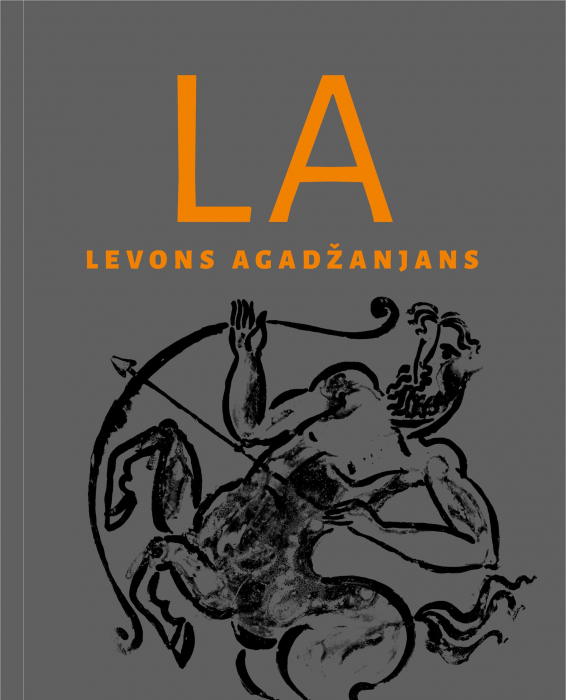
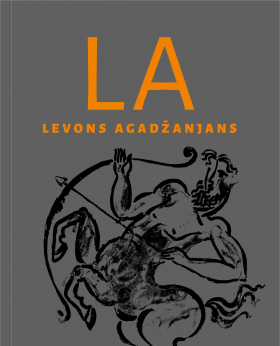 Riga Porcelain Museum publishes a book "Levons Agadžanjans" dedicated to the famed Riga Porcelain Factory designer.
The Riga Porcelain Museum has launched a monograph dedicated to Levons Agadžanjans (1940-1999), an Armenian whose creative legacy is tied to Latvia—one of the leading designers at the Riga Porcelain Factory in the second half of the 20th century and the author of many iconic designs. The book features also 22 female colleagues who decorated Levon Agadžanjans' designs on daily basis in the factory.
Levons Agadžanjans (1940–1999) was one of the most prolific designers of forms at the Riga Porcelain Factory (RPR). Over four decades, he created dozens of iconic forms that characterised the factory style and which were widely used in private and public settings in the second half of the 20th century.
The 1960s coffee service "Teresa" and the set of dishes "Moka". The 1970s coffee services "Riga" and "Nelda", and the lunch services "October" and "Wave". The 1980s versions of "Riga" and the popular tea, coffee and lunch service ensembles "Ārija" and "Viktorija", elements of which are still in use in many households. The vase "Laura" was named after Levon’s sister, the service "Viola" was named after his wife and the decorative vase "Gajane", bears the name of his daughter. Individual dishes and their sets, small plastics, and representation porcelain made from faience, porcelain and thin-walled porcelain emerged as both mass produced items and artistically high-quality luxury class products, or became creative experiments or items not approved for production which morphed into works with which the artist entered the professional applied arts scene.
The Armenian-born artist has outgrown ethnic boundaries, and with his works of art in clay, chamotte and stone mass has become a treasured member of the family of Latvian professional ceramicists. Whereas industrial production was determined by the available materials, i.e. faience, porcelain and thin-walled porcelain, in creative activity the range of materials, their application and technological techniques was wider. In the 1970s, Levons Agadžanjans joined the Union of Artists and became a member of the Art Foundation’s ceramics studio "Logs" [Window]. Like other professional artists during the period, he created decorative solutions for public buildings, sold smaller forms through the Art Foundation's salon stores, and regularly exhibited his works in exhibitions of various calibres and themes. Special mention must be made of garden ceramics shows, in which Levon was able to express himself in an oversized format.
The book "Levons Agadžnajans" is based on a study conducted by the art historian Dzintra Spradzenko under the project CARD (Cultural Capital as a Resource for the Sustainable Development of Latvia) funded by the Ministry of Culture of the Republic of Latvia. It reveals the artist's curriculum vitae and creative activity across its entire spectrum, for the first time prominently exploring not only his industrial design works, but also general creative experiments in the field of applied arts, analysing them in a broader cultural and historical context. The study gathers information from the Riga Porcelain Museum and other institutions: the Museum of Decorative Arts and Design, the Museum of the History of Riga and Navigation, the Estonian Museum of Applied Art and Design, the archives of the Artists' Union of Latvia, the Latvian State Archive of Film Photographic Documents, etc. The publication is illustrated with images of objects in museum collections, as well as objects owned by private collectors and private individuals. Materials owned by the artist's family and their relatives have been widely used.
The book also performs a second function. Thanks to the Riga Porcelain Museum team, the monograph is also the first exploration of the important, but hitherto little-studied theme of decals. The RPR staff included artists whose responsibilities included the development of decal designs for the factory's products. While Levons Agadžanjans also created some decals, mostly for his own industrial forms, several dozen artists gave a diverse and distinctive look to the forms designed by Levon, contributing their skills, knowledge and creative ingenuity. Twenty-two of them are mentioned and appraised in the book.
The body of works created by RPR’s artistic team is an important part of the industrial cultural heritage of Latvia. This book reveals its diversity and interconnections, and the people involved in its creation, especially Levons Agadžanjans.
The publication of the monograph has been made possible with the financial support of the State Culture Capital Foundation and the Riga State City Municipality.
For information on obtaining the book, please contact the Riga Porcelain Museum by email: rpm@riga.lv
-
THE UPCOMING EVENTS
The Association of Culture Institutions of Riga City Council, Pils Street 18, Riga, Latvia, LV1050, apvieniba@riga.lv
.png)